The World Has Entered a New Phase — and AI Is at Its Core
Over thousands of years, humanity’s progress has always been shaped by tools.
🔥 Fire gave us warmth.
⚙️ The wheel gave us motion.
⚡ Electricity gave us power.
💻 Computers gave us logic.
And now, Generative AI gives us creativity itself.
In the same way that the Industrial Revolution reshaped how we worked with our hands, this new AI revolution is reshaping how we work with our minds.
Generative AI isn’t science fiction anymore — it’s in our documents, emails, designs, data, and classrooms. It’s writing code, creating videos, and even assisting in research and strategy.
But there’s one big problem…
Most people still don’t really understand what it is or how to use it effectively.
What Exactly Is Generative AI?
Generative AI refers to systems that can create new content — text, images, videos, code, or music — based on the data they’ve learned from.
Unlike traditional AI, which just analyzes or classifies data, Generative AI produces something new.
Tools like ChatGPT, Claude, DALL·E, Midjourney, and Runway ML are all examples of Generative AI in action.
At the core of these systems are Large Language Models (LLMs) — powerful neural networks trained on vast amounts of text. These models learn language patterns and context, allowing them to generate coherent, human-like responses.
The Evolution of AI — A Quick Journey Through Time
The dream of artificial intelligence isn’t new.
In the 1950s, Alan Turing posed the famous question: “Can machines think?”
His work on the Enigma code during World War II and his Turing Test laid the foundation for AI research.
Through the decades, AI went through cycles of hype and disappointment — what we now call the AI Winters, when progress slowed and funding vanished.
But around 2017, everything changed.The introduction of the Transformer architecture and models like GPT reignited the field — and Generative AI was born.
Today, AI can write essays, create art, build software, and assist in decision-making. It’s no longer a niche topic — it’s a skill every professional needs to understand.
Why Learning Generative AI Is No Longer Optional
Every professional — from marketers to engineers to teachers — is being touched by AI.
Here’s why learning it matters:
- AI is becoming your co-worker.
- It drafts emails, analyzes data, and automates reports — but it needs your direction.
- Understanding AI gives you control.
Those who learn how to guide AI will lead teams and innovate faster. - AI fluency is the new digital literacy.
Just as learning Excel was once essential, learning AI tools is becoming the next professional baseline. - You can save hours every week.
Imagine creating presentations, summaries, and reports in minutes instead of hours — all possible with Generative AI.
How to Get Started With Generative AI
If you’re just beginning, don’t worry — you don’t need to be a programmer or data scientist.
Here’s a simple roadmap:
Start small.
Try free tools like ChatGPT, Canva Magic Studio, or Microsoft Copilot.
Experiment with simple prompts like:
“Explain Generative AI in simple terms with an example.”
Learn the art of prompts.
Good output comes from good input. Learn to frame your prompts clearly using the “4W Framework” — What, Why, Who, and What Format.
Explore creative applications.
Use AI for writing emails or blogs.
Generate images for presentations.
Summarize data and research papers.
Keep learning.
Follow reliable sources, experiment daily, and treat AI as a thinking partner — not a replacement.
A Practical Guide to Help You Along the Way
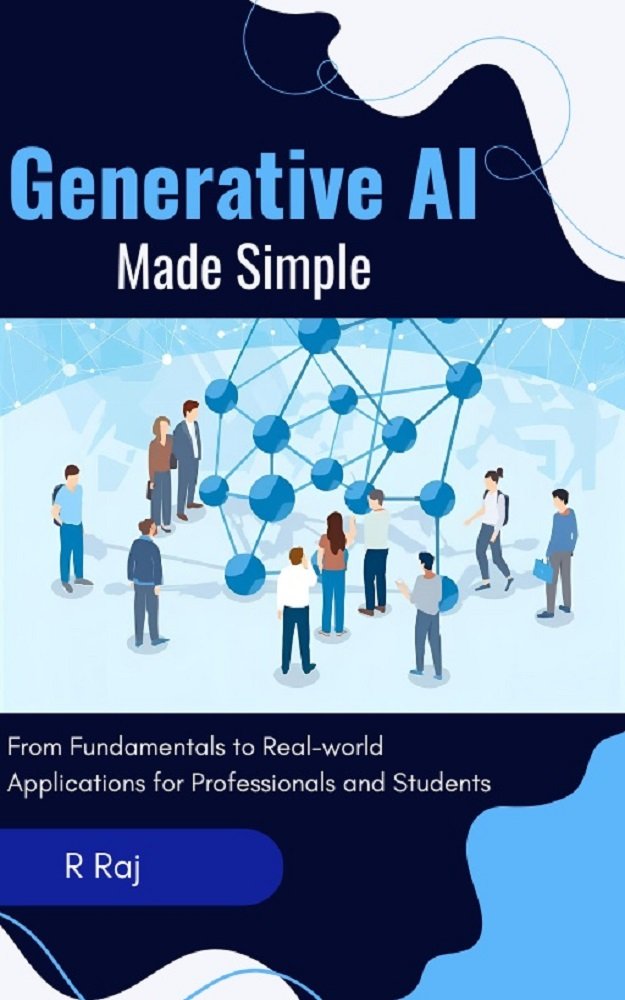
If you are looking to get started with Generative AI, we reccomend you check out our E-Book Generative AI Made Simple: From Fundamentals to Real-World Applications for Professionals and Students comes in — a clear, practical guide designed to help anyone learn and apply Generative AI faster.
It’s a hands-on, beginner-friendly resource that breaks complex concepts into simple, real-world lessons, covering:
-
The evolution and inner workings of Generative AI 🧩
-
How to craft effective prompts for better AI responses 💬
-
Using AI tools for writing, presentations, and visuals 🖋️🎨
-
Applying AI in data analysis, automation, and coding 💻
-
Practical, industry-specific applications 🔍
-
Ethics, compliance, and the future of responsible AI 🌍
Whether you’re a student eager to understand AI fundamentals or a professional looking to integrate AI into your daily work, this guide will help you move from curiosity to confidence — and start leveraging AI effectively from day one
📘 Get your copy now